
Introduction
Many people feel confused or even scared when they hear about strong-smelling cheeses. The problem is that most people do not understand what blue cheese is, how it is made, or why it is safe to eat. Because of this lack of knowledge, they miss out on one of the most unique gourmet foods in the world. The solution is simple: once you learn the science and process behind it, you will understand that blue cheese is not spoiled food but a carefully crafted fermented dairy product with rich flavor and health benefits.
In this article, you will learn everything about blue cheese, including its origin, production process, taste, benefits, uses, and storage tips in very simple language.
What Is Blue Cheese?
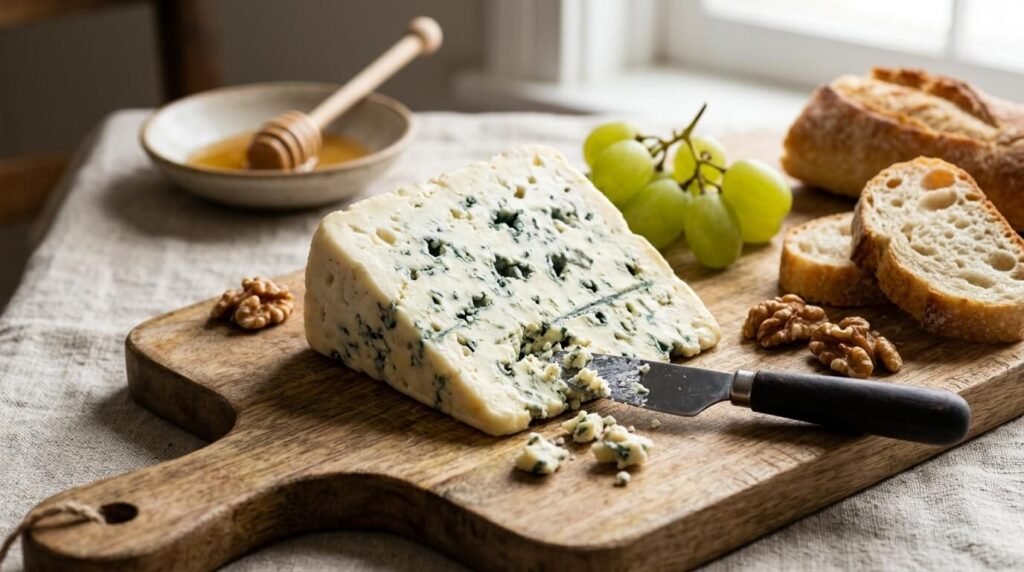
Blue cheese is a special type of cheese that contains blue or green veins. These veins are made by safe mold called Penicillium roqueforti. This mold is added during production and helps create the strong flavor and unique look.
Blue cheese can be made from:
- Cow milk
- Goat milk
- Sheep milk
It has a strong smell, salty taste, and creamy or crumbly texture depending on the type.
In simple words, blue cheese is a fermented cheese with edible mold that gives it a bold taste and aroma.
How Blue Cheese Is Made
The process of making blue cheese is controlled and safe. It is not accidental mold growth.
Step-by-step process:
1. Milk preparation
Fresh milk is collected and heated to remove harmful bacteria.
2. Adding bacteria and mold
Good bacteria and mold spores are added to start fermentation.
3. Curds formation
Rennet is added to separate milk into solid curds and liquid whey.
4. Cutting and draining
Curds are cut into small pieces to remove extra liquid.
5. Salting
Salt is added for flavor and preservation.
6. Piercing process
Cheese is pierced with needles so air can enter. This helps mold grow inside.
7. Aging
Cheese is stored for weeks or months to develop flavor.
This careful process is what gives blue cheese its strong and unique taste.
Why Blue Cheese Has Blue Lines
The blue or green lines in blue cheese are caused by oxygen entering the cheese during the piercing stage. This oxygen activates mold growth inside.
These veins:
- Are completely safe
- Give strong flavor
- Create unique aroma
Without this process, blue cheese would not have its signature look or taste.
Types of Blue Cheese
There are many types of blue cheese around the world. Each has a different taste and texture.
1. Roquefort (France)
- Made from sheep milk
- Very strong and salty
2. Gorgonzola (Italy)
- Creamy texture
- Mild or strong versions available
3. Stilton (England)
- Crumbly and rich
- Slightly sweet and earthy
4. Danish Blue
- Strong flavor
- Smooth texture
Taste of Blue Cheese
The taste of blue cheese is very unique and complex. It is not like regular cheese.
Common flavor notes include:
- Salty
- Tangy
- Creamy
- Sharp
- Slightly spicy
Some people love it instantly, while others need time to adjust.
Nutritional Value of Blue Cheese
Blue cheese is not only tasty but also nutritious.
It contains:
- Calcium (for strong bones)
- Protein (for muscles)
- Vitamin B12 (for energy)
- Healthy fats (for body function)
However, it is also high in sodium and fat, so it should be eaten in moderation.
Health Benefits of Blue Cheese
When eaten in small amounts, blue cheese may offer health benefits:
1. Strong bones
Calcium helps maintain bone strength.
2. Better digestion
Some types contain good bacteria that support gut health.
3. Muscle support
Protein helps muscle repair and growth.
4. Energy boost
Vitamins and fats provide energy.
Uses of Blue Cheese in Food
Blue cheese is used in many dishes around the world.
Popular uses:
- Salad dressings
- Burger toppings
- Pasta sauces
- Pizza toppings
- Cheese boards
It mixes well with sweet foods like fruits and honey.
Best Food Pairings with Blue Cheese
To enjoy blue cheese better, pairing is very important.
Best combinations:
- Apples and pears
- Walnuts
- Honey
- Steak
- Red wine
Sweet foods balance its strong flavor.
How to Store Blue Cheese
Proper storage keeps blue cheese fresh longer.
Tips:
- Wrap in wax paper
- Store in airtight box
- Keep in refrigerator
- Avoid freezing
This helps maintain flavor and texture.
Common Myths About Blue Cheese
Myth 1: It is spoiled food
False – mold is controlled and safe
Myth 2: It is unhealthy
False – it is healthy in moderation
Myth 3: It smells bad because it is rotten
False – smell comes from fermentation
Why Blue Cheese Is Special
Blue cheese is unique because:
- It uses controlled mold growth
- It has strong, complex flavors
- It is made using traditional methods
- It is used in gourmet cooking worldwide
No other cheese has the same taste and texture combination.
Conclusion
Blue cheese is one of the most interesting and misunderstood foods in the world. Although its smell and appearance may seem unusual, it is actually a carefully crafted product made through a safe fermentation process. From its production to its taste and health benefits, everything about blue cheese shows how science and tradition come together to create something special.
If you enjoy bold flavors and want to explore gourmet food, blue cheese is definitely worth trying in salads, sauces, or simple pairings.
For reservations and additional information, visit : candizi.net