
Introduction
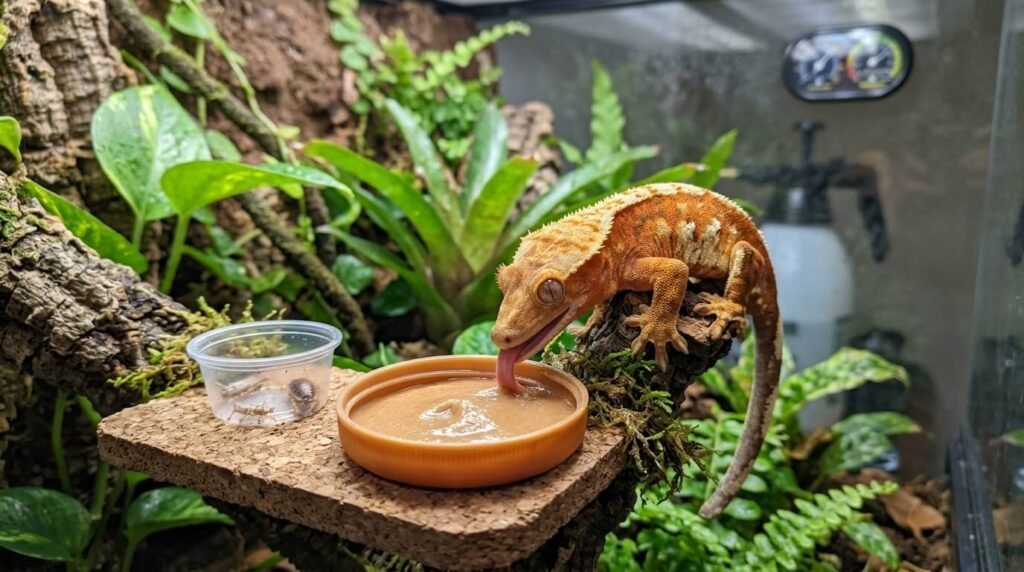
Choosing the right crested gecko food is one of the biggest challenges new owners face. Many keepers are unsure whether they should feed insects, fruit, commercial diets, or a combination of all three. Feeding the wrong foods can lead to nutritional deficiencies, poor growth, obesity, and long-term health issues. The solution is simple: provide a balanced diet centered around a high-quality commercial crested gecko diet (CGD), supplemented with appropriate insects and occasional treats. This guide explains everything you need to know about crested gecko nutrition, feeding schedules, safe foods, and common feeding mistakes to help your gecko thrive.
Understanding the Natural Diet of Crested Geckos
Crested geckos (Correlophus ciliatus) are omnivorous reptiles native to New Caledonia. In the wild, they consume a variety of foods, including:
- Ripe fruits
- Nectar
- Pollen
- Soft-bodied insects
- Small invertebrates
Their natural diet is diverse, which is why a balanced feeding plan is essential in captivity. Modern commercial diets are designed to replicate these nutritional needs while providing the vitamins and minerals required for healthy growth and development.
What Is the Best Crested Gecko Food?
The best crested gecko food is a nutritionally complete commercial crested gecko diet (CGD). These powdered diets are mixed with water to create a smoothie-like consistency that most geckos readily accept.
Popular high-quality brands include:
- Pangea
- Repashy
- Arcadia
- Zoo Med
- Gecko Pro
These diets contain:
- Fruit-based ingredients
- Protein sources
- Calcium
- Vitamin D3
- Essential vitamins and minerals
For most pet geckos, a quality CGD should make up approximately 70–90% of the diet.
Crested Gecko Diet in Captivity
A healthy captive diet typically includes three components:
1. Commercial Crested Gecko Diet
This should be the foundation of the feeding program.
Benefits include:
- Balanced nutrition
- Convenient feeding
- Consistent calcium levels
- Reduced risk of deficiencies
Offer freshly mixed food and remove leftovers after 24 hours.
2. Live Insects
Live insects provide enrichment and additional protein.
Safe feeder insects include:
- Crickets
- Dubia roaches
- Black soldier fly larvae
- Silkworms
- Locusts
- Mealworms (occasionally)
Insects should be gut-loaded and lightly dusted with calcium.
3. Occasional Fruit Treats
Fruit should be offered sparingly because of its sugar content.
Safe fruits include:
- Mango
- Papaya
- Banana
- Peach
- Fig
- Apricot
Treat fruits should never replace a complete crested gecko diet.
Crested Gecko Feeding Schedule
Feeding frequency depends on age.
Baby Crested Geckos (0–6 Months)
- CGD available daily
- Insects 1–2 times weekly
- Fresh water available at all times
Growing babies require frequent access to food because of their rapid development.
Juvenile Crested Geckos (6–12 Months)
- CGD daily or every other day
- Insects 1–2 times weekly
Monitor weight gain regularly.
Adult Crested Geckos (12+ Months)
- CGD every 2–3 days
- Insects once weekly
Most adults maintain healthy body condition on this schedule.
Do Crested Geckos Need Insects?
Yes, although insects are not always mandatory if a complete commercial diet is used.
Benefits of insects include:
- Additional protein
- Mental stimulation
- Natural hunting behavior
- Variety in diet
Some geckos eagerly hunt insects, while others prefer prepared diets.
Suitable insects include:
- Crickets
- Dubia roaches
- Silkworms
- Black soldier fly larvae
Avoid wild-caught insects because they may carry parasites or pesticides.
What Fruits Can Crested Geckos Eat?
Fruit is a natural part of a crested gecko’s diet, but moderation is important.
Safe Fruits
- Mango
- Papaya
- Banana
- Pear
- Peach
- Fig
- Apricot
Fruits to Feed Sparingly
- Watermelon
- Grapes
- Strawberries
Fruits to Avoid
- Citrus fruits
- Lemon
- Lime
- Grapefruit
- Orange
High-acid fruits can cause digestive upset and should not be offered.
Foods Crested Geckos Should Never Eat
Knowing what not to feed is just as important as knowing what to feed.
Avoid:
Avocado
Contains compounds that may be toxic to reptiles.
Rhubarb
Potentially harmful due to oxalate content.
Citrus Fruits
Too acidic for crested geckos.
Fireflies
Highly toxic to reptiles.
Wild Insects
May contain parasites or chemical contaminants.
Processed Human Foods
Avoid:
- Bread
- Dairy products
- Chocolate
- Sugary snacks
- Salty foods
These foods provide no nutritional value and may be harmful.
Calcium and Vitamin Supplementation
Calcium is essential for:
- Bone growth
- Muscle function
- Egg production
- Prevention of metabolic bone disease (MBD)
If feeding a complete CGD, additional supplementation is often minimal.
However, feeder insects should generally be:
- Gut-loaded before feeding
- Dusted with calcium powder
Breeding females may require extra nutritional support under veterinary guidance.
How Much Should a Crested Gecko Eat?
Unlike dogs or cats, crested geckos regulate food intake naturally.
General guidelines:
- Offer a small dish of CGD
- Remove uneaten food after 24 hours
- Observe feeding activity
- Monitor body condition monthly
Signs of healthy feeding include:
- Steady growth
- Consistent weight
- Strong grip
- Active behavior
- Healthy shedding
Common Feeding Mistakes to Avoid
Many health issues stem from feeding errors.
Feeding Too Many Treats
Fruit and insects should supplement, not replace, a complete diet.
Overfeeding Insects
Excessive insect feeding may cause nutritional imbalances.
Ignoring Calcium Needs
Calcium deficiencies can lead to metabolic bone disease.
Offering Unsafe Foods
Always verify food safety before introducing new items.
Leaving Food Too Long
Spoiled food can attract mold and bacteria.
Signs Your Crested Gecko Has a Healthy Diet
A properly nourished gecko usually displays:
- Bright eyes
- Good body condition
- Strong appetite
- Regular shedding
- Healthy growth
- Active nighttime behavior
Regular weighing helps identify problems early.
Why Some Crested Geckos Stop Eating
Temporary appetite loss can occur due to:
- Relocation stress
- Seasonal changes
- Breeding season
- Improper temperatures
- Illness
If your gecko refuses food for an extended period or loses weight, consult a reptile veterinarian.
Water Requirements for Crested Geckos
Hydration is often overlooked.
Provide:
- Fresh water daily
- Regular enclosure misting
- Proper humidity levels
Many crested geckos prefer licking water droplets from leaves and enclosure surfaces.
Signs of dehydration include:
- Wrinkled skin
- Lethargy
- Difficulty shedding
Choosing the Right Commercial Crested Gecko Diet
When selecting a commercial diet, look for:
- Complete nutritional formulation
- Added calcium and vitamins
- Quality protein sources
- Positive reputation among reptile keepers
Avoid products marketed solely as treats.
A complete diet should clearly indicate that it can serve as a staple food.
Frequently Asked Questions About Crested Gecko Food
Can crested geckos eat only insects?
No. Insects alone do not provide balanced nutrition.
Can crested geckos eat only fruit?
No. Fruit lacks essential nutrients required for long-term health.
How often should adults eat?
Most adults thrive when fed every two to three days.
Do crested geckos need water?
Yes. Fresh water should always be available.
Is hand-feeding recommended?
Occasional hand-feeding is acceptable, but geckos should primarily eat independently.
Conclusion
Providing the right crested gecko food is the foundation of responsible reptile care. A high-quality commercial crested gecko diet should serve as the primary food source, while appropriately sized insects and occasional fruit treats add variety and enrichment. By following a proper feeding schedule, maintaining hydration, and avoiding unsafe foods, you can support healthy growth, strong bones, and a long, happy life for your crested gecko. Consistency is key—when nutrition is balanced and feeding practices are correct, crested geckos are among the easiest and most rewarding reptiles to keep.