
Introduction
Many people want to attract bluebirds to their backyard, but they often struggle because they do not know the right food to offer. Feeding the wrong foods or placing feeders in the wrong location can discourage bluebirds from visiting. The good news is that learning about bluebird food is simple. By choosing healthy foods, using the right feeders, and understanding bluebirds’ natural diet, you can create a safe and welcoming environment that encourages these beautiful birds to visit your yard throughout the year.
Bluebirds are among the most colorful and beneficial birds found in North America. They help control insects naturally and add beauty and life to gardens, farms, and backyards. Although bluebirds mainly eat insects and berries in the wild, many people successfully attract them with carefully selected foods. This guide explains everything you need to know about feeding bluebirds, including what they eat, the best foods to offer, seasonal feeding tips, and common mistakes to avoid.
What Do Bluebirds Eat?
Bluebirds are omnivores, meaning they eat both insects and fruits. Their diet changes depending on the season.
During spring and summer, bluebirds mainly eat insects because they need protein for nesting and raising their young. Common insects include:
- Beetles
- Grasshoppers
- Crickets
- Caterpillars
- Spiders
- Ants
As temperatures become cooler, insects become less available. During fall and winter, bluebirds switch to fruits and berries.
Some favorite berries include:
- Elderberries
- Dogwood berries
- Holly berries
- Juniper berries
- Sumac berries
- Wild grapes
This natural seasonal diet helps bluebirds stay healthy throughout the year.
Best Bluebird Food for Backyard Feeders
If you want to attract bluebirds, offering the right foods is very important.
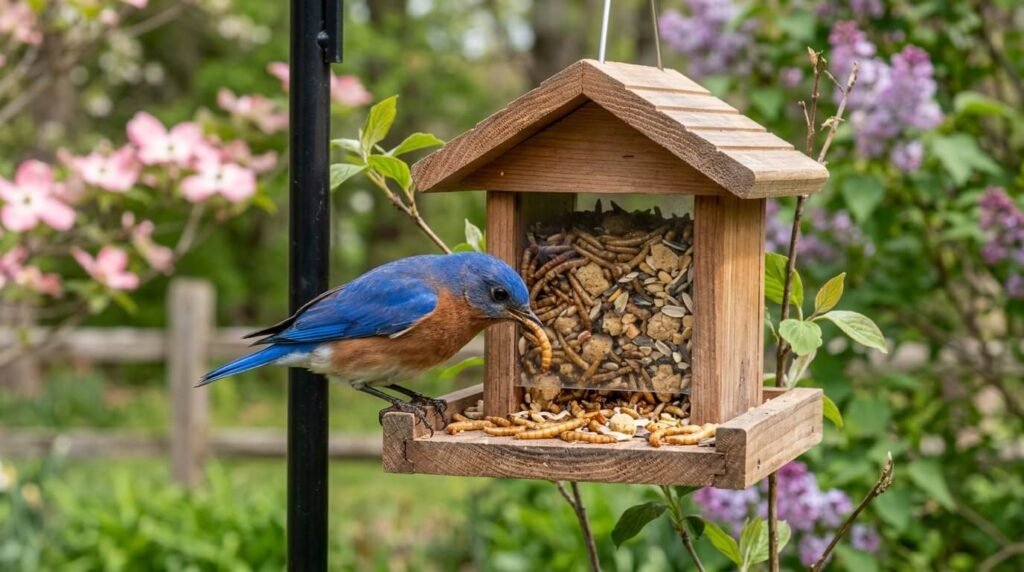
Mealworms
Mealworms are considered the number one food for bluebirds. They are rich in protein and closely resemble the insects bluebirds naturally eat.
Both live and dried mealworms work well.
Benefits include:
- High protein
- Easy to digest
- Excellent for nesting season
- Attracts bluebirds quickly
If using dried mealworms, soak them in warm water for several minutes before serving.
Suet
Suet provides extra energy during cold weather.
Choose suet made specifically for insect-eating birds.
Avoid suet containing excessive artificial ingredients.
Soft Fruits
Fresh fruits are another excellent option.
Good choices include:
- Blueberries
- Chopped apples
- Grapes
- Raisins soaked in water
- Cherries
- Mulberries
Always cut large fruits into small pieces.
Berries
Natural berries are among the healthiest foods bluebirds can eat.
Planting berry-producing shrubs provides a long-term food source.
Foods Bluebirds Should Never Eat
Not every bird food is suitable for bluebirds.
Avoid feeding:
- Bread
- Salty snacks
- Chocolate
- Sugary foods
- Moldy fruit
- Avocado
- Highly processed foods
These foods provide little nutrition and may even be harmful.
Why Mealworms Are a Favorite Bluebird Food
Mealworms closely match what bluebirds naturally search for in the wild.
They contain:
- Protein
- Healthy fats
- Vitamins
- Minerals
Mealworms are especially valuable during:
- Nesting season
- Cold winter months
- Migration periods
Many bird lovers notice bluebirds visiting within a few days after offering mealworms consistently.
Best Feeders for Bluebirds
Bluebirds prefer open feeding stations instead of enclosed tube feeders.
Popular feeder types include:
Platform Feeders
Easy for bluebirds to land on.
Provide excellent visibility.
Mealworm Feeders
Specially designed to hold live or dried mealworms.
Many include protective covers that reduce competition from larger birds.
Tray Feeders
Simple to clean and ideal for fruit and berries.
Place feeders about five feet above the ground in open areas where bluebirds can easily spot them.
Where Should You Place a Bluebird Feeder?
Location matters almost as much as the food itself.
Choose a location that is:
- Quiet
- Open
- Near trees
- Away from heavy foot traffic
- Safe from cats
Bluebirds like open spaces because they can easily watch for predators.
Avoid placing feeders deep inside dense bushes.
Seasonal Feeding Guide
Spring
Spring is breeding season.
Offer:
- Live mealworms
- Dried mealworms
- Fresh water
Protein helps adults feed growing chicks.
Summer
Continue offering insects.
Natural insects become plentiful, so feeder visits may decrease.
This is completely normal.
Fall
Begin adding fruits and berries.
Bluebirds prepare for cooler weather by increasing energy intake.
Winter
Winter can be difficult because insects are scarce.
Offer:
- Mealworms
- Suet
- Berries
- Fresh water that does not freeze
Consistent feeding during winter greatly improves survival.
Can Baby Bluebirds Eat the Same Food?
Baby bluebirds require mostly insects because they need large amounts of protein for healthy growth.
Adult bluebirds naturally collect:
- Caterpillars
- Beetles
- Grasshoppers
- Soft insects
Never attempt to feed baby bluebirds unless advised by a licensed wildlife rehabilitator.
Adult birds know exactly what their chicks need.