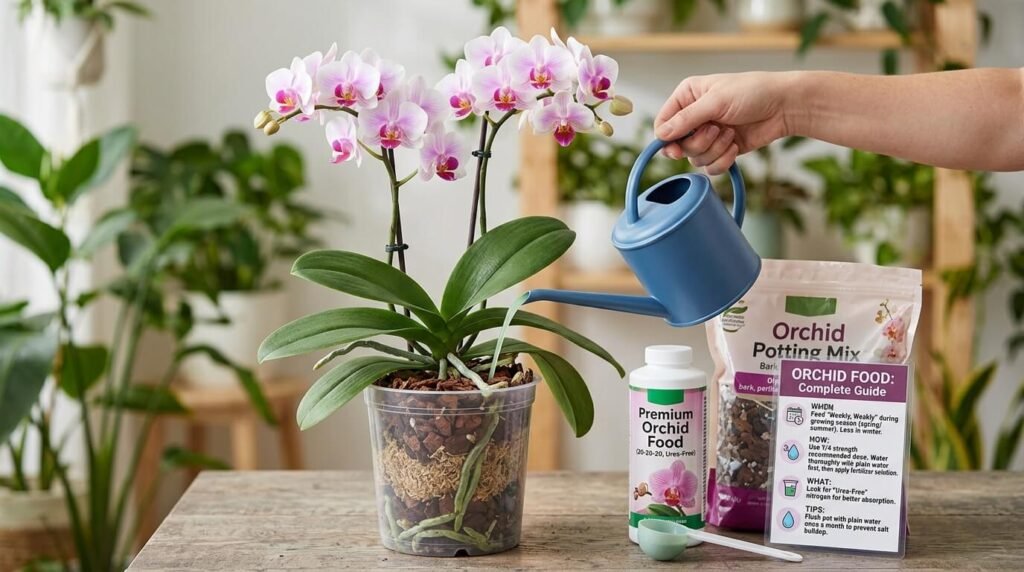

Orchid food plays a vital role in keeping orchids healthy, vibrant, and blooming throughout the year. While orchids are known for their stunning flowers and elegant appearance, they require proper nutrition to reach their full potential. Many beginners believe watering alone is enough, but regular feeding provides the essential nutrients orchids need for strong roots, lush leaves, and long-lasting blooms.
This guide explains everything you need to know about orchid food, including its benefits, types, feeding schedule, application methods, and common mistakes to avoid.
What Is Orchid Food?
Orchid food is a specially formulated fertilizer designed to meet the nutritional needs of orchids. Unlike ordinary garden plants, orchids grow in bark, moss, or other airy growing media that contain very few natural nutrients. Because of this, they depend on regular feeding for healthy development.
A quality orchid fertilizer typically contains the three primary nutrients:
- Nitrogen (N): Encourages healthy leaf and stem growth.
- Phosphorus (P): Supports root development and flower production.
- Potassium (K): Improves plant strength and disease resistance.
Many orchid fertilizers also include important micronutrients such as calcium, magnesium, iron, manganese, zinc, and boron.
Why Orchids Need Regular Feeding
Orchids naturally grow on trees in tropical forests, where they absorb nutrients from rainwater, decomposing organic matter, and the surrounding environment. Indoors, these natural nutrient sources are limited.
Providing regular fertilizer offers several benefits:
- Produces larger and brighter blooms
- Encourages stronger root systems
- Promotes healthy green foliage
- Supports continuous plant growth
- Helps orchids recover after flowering
- Improves resistance to stress and diseases
Proper nutrition allows orchids to bloom more consistently while maintaining overall plant health.
Types of Orchid Food
Several fertilizer options are available for orchid growers. Choosing the right one depends on your growing conditions and personal preference.
Water-Soluble Fertilizer
This is the most popular option because it mixes easily with water and provides nutrients quickly. It allows better control over feeding strength and frequency.
Liquid Fertilizer
Liquid concentrates are simple to dilute and apply during routine watering. Many indoor orchid growers prefer this option because of its convenience.
Slow-Release Fertilizer
Slow-release pellets gradually release nutrients over several weeks or months. They reduce the need for frequent fertilizing but should be used carefully to prevent overfeeding.
Organic Orchid Fertilizer
Organic products contain natural ingredients such as fish emulsion, kelp extract, compost tea, or seaweed. These products improve soil biology while supplying gentle nutrition.
Understanding Fertilizer Ratios
Fertilizer labels display three numbers representing nitrogen, phosphorus, and potassium.
Common examples include:
- 20-20-20: Balanced nutrition for general growth.
- 30-10-10: Higher nitrogen for orchids growing in bark media.
- 10-30-20: Higher phosphorus to encourage flowering.
Many experienced growers switch fertilizer formulas depending on the plant’s growth stage.
How Often Should You Feed Orchids?
Most orchids benefit from regular but light feeding.
A common recommendation is:
- Feed every one to two weeks during active growth.
- Reduce feeding during dormancy.
- Water with plain water once each month to flush excess fertilizer salts.
Many orchid enthusiasts follow the simple rule:
“Weakly, weekly.”
This means using a diluted fertilizer solution every week instead of applying full-strength fertilizer occasionally. This method reduces the risk of fertilizer burn.
Best Time to Apply Orchid Food
Morning is generally the best time to fertilize orchids.
Morning feeding allows plants to:
- Absorb nutrients efficiently
- Dry before cooler evening temperatures
- Reduce the risk of fungal diseases
Avoid fertilizing dry plants. Always water lightly before applying fertilizer if the growing medium is completely dry.
How to Apply Orchid Food Correctly
Applying fertilizer properly is just as important as choosing the right product.
Follow these simple steps:
- Dilute fertilizer according to label instructions.
- Use half or quarter strength for indoor orchids.
- Water the orchid evenly until the growing medium becomes moist.
- Avoid allowing fertilizer to collect in the crown of the plant.
- Flush the pot with clean water once every month.
Consistent care produces better results than heavy feeding.
Signs Your Orchid Needs More Nutrients
Healthy orchids show steady growth and produce vibrant flowers. A nutrient deficiency may appear as:
- Slow growth
- Pale green or yellow leaves
- Small flowers
- Weak flower spikes
- Reduced blooming
- Poor root development
Before increasing fertilizer, check light, watering, temperature, and humidity because these factors also influence orchid health.
Signs of Overfeeding
Applying too much fertilizer can damage orchids.
Common symptoms include:
- Brown root tips
- White salt buildup on the potting medium
- Burned leaf edges
- Soft or damaged roots
- Drooping leaves
- Reduced flowering
If overfeeding occurs, flush the growing medium thoroughly with clean water and temporarily stop fertilizing.
Choosing the Right Orchid Food for Different Orchids
Different orchid varieties have similar nutritional needs but may benefit from slight adjustments.
Phalaenopsis Orchids
These popular orchids thrive with balanced fertilizer during active growth and moderate feeding throughout the year.
Cattleya Orchids
These orchids appreciate regular feeding while producing new leaves and flower spikes.
Dendrobium Orchids
Dendrobiums grow vigorously during the growing season and respond well to consistent fertilizer applications.
Oncidium Orchids
Balanced nutrition encourages healthy pseudobulbs and abundant flowering.
Common Mistakes to Avoid
Many orchid problems result from incorrect fertilizing practices.
Avoid these common mistakes:
- Applying fertilizer at full strength every time
- Feeding completely dry plants
- Ignoring fertilizer salt buildup
- Using regular garden fertilizer excessively
- Fertilizing during severe plant stress
- Forgetting to adjust feeding during dormant periods
Small adjustments often make a significant difference in orchid health.
Additional Care Tips for Healthy Orchids
Fertilizer alone cannot guarantee beautiful blooms. Orchids also require proper environmental conditions.
Maintain these essentials:
- Bright indirect sunlight
- Good air circulation
- Proper humidity levels
- Well-draining orchid bark or moss
- Appropriate watering schedule
- Suitable temperatures for your orchid variety
When these factors work together with regular feeding, orchids thrive for many years.
Frequently Asked Questions
What is the best orchid food?
A balanced water-soluble fertilizer with essential micronutrients is an excellent choice for most orchids. Orchids growing in bark often benefit from higher nitrogen formulas.
Can I use regular plant fertilizer?
Regular houseplant fertilizer may work if diluted properly, but fertilizers designed specifically for orchids generally provide better nutrient balance.
How often should I fertilize orchids?
Most orchids perform well with diluted fertilizer every one to two weeks during active growth and less frequently during dormancy.
Can too much fertilizer harm orchids?
Yes. Excess fertilizer can burn roots, reduce flowering, and create harmful salt buildup in the growing medium.
Is organic orchid food effective?
Yes. Organic fertilizers provide gentle nutrition and improve the overall growing environment when used consistently.
Conclusion
Using the right orchid food is one of the simplest ways to improve orchid health and encourage spectacular blooms. Regular feeding, proper watering, adequate light, and a well-draining growing medium work together to create ideal growing conditions. Whether you are caring for a single Phalaenopsis or an extensive orchid collection, a consistent fertilizing routine helps plants develop stronger roots, healthier leaves, and beautiful flowers year after year.