
Introduction
Many people enjoy short stories, but they often miss the deeper wisdom hidden inside them. That is why frog & the hen remains a timeless favorite. It is a joyful animal tale that entertains readers while teaching powerful life lessons. This story shows the danger of judging others too quickly and the importance of respecting honest work. With simple characters and a meaningful message, it is loved by both children and adults.
What Is Frog & the Hen?
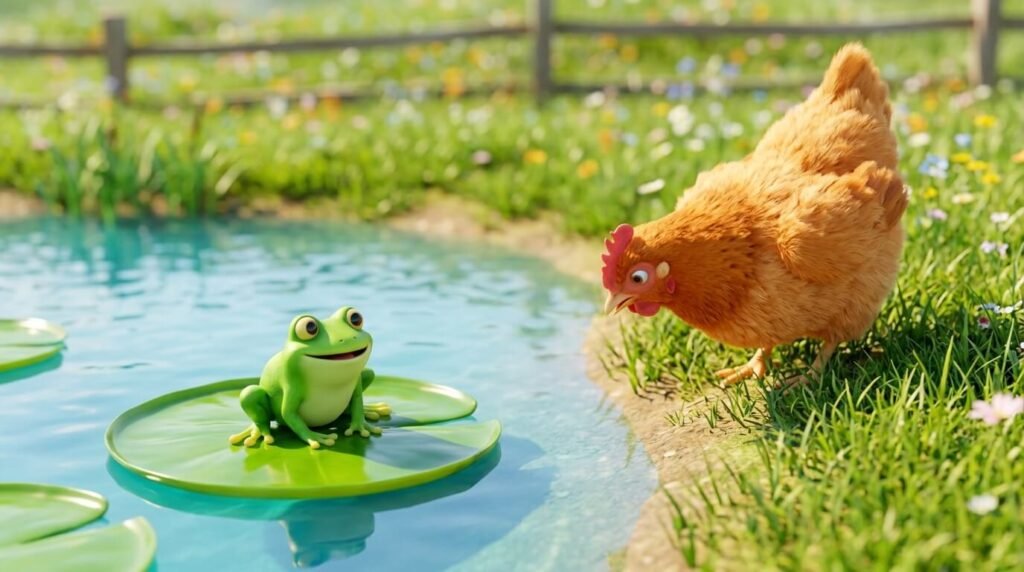
frog & the hen is a classic moral story about a frog who becomes annoyed by the loud clucking of a hen. He complains about the noise and mocks her excitement. The hen calmly replies that she has just laid an egg, something useful and valuable. She reminds the frog that while he croaks all day, she has achieved something meaningful.
This short exchange creates an unforgettable lesson about criticism, effort, and wisdom.
Origin of Animal Moral Stories
Animal stories have been part of human culture for centuries. Many old fables use birds, frogs, lions, foxes, and other animals to reflect human behavior. These tales are simple, entertaining, and easy to remember.
Stories like frog & the hen continue to be popular because they teach moral values in a gentle and enjoyable way. Parents, teachers, and storytellers often use them to explain character-building lessons.
Full Story Summary
One day, a frog was resting near a pond when he heard a hen clucking loudly nearby. The sound annoyed him. He called out and asked why she was making such a fuss.
The hen proudly answered that she had laid an egg.
The frog laughed and told her there was no reason to make so much noise over one egg.
The hen quickly replied that while the frog made noise every day without producing anything useful, she had created something valuable. Her joy was based on real achievement.
The frog became silent because he had no good answer.
That is why frog & the hen is remembered as a story of truth and wisdom.
Main Characters in the Story
The Frog
The frog represents people who criticize others without thinking. He complains loudly but does not see his own faults. He judges the hen while ignoring his own behavior.
The Hen
The hen represents hard work, confidence, and purpose. She celebrates her success and responds wisely to unfair criticism.
Together, these two characters make frog & the hen simple yet powerful.
Moral Lessons from the Story
1. Respect Honest Work
The hen worked hard and produced something useful. Effort deserves appreciation.
2. Do Not Judge Quickly
The frog judged before understanding the reason for the noise. Many people make the same mistake in daily life.
3. Empty Noise Has No Value
Talking too much without purpose has little meaning. Results matter more than unnecessary criticism.
4. Self-Reflection Is Important
Before pointing at others, people should first examine themselves.
These lessons make frog & the hen valuable even today.
Why Children Love This Story
Children enjoy animal characters because they are fun and imaginative. A frog and a hen talking to each other feels playful and interesting. The short length also keeps children engaged.
This story helps children learn:
- Good manners
- Respect for others
- The value of hard work
- Thinking before speaking
- Confidence with kindness
Because of these benefits, frog & the hen is often shared in schools and homes.
Why Adults Can Learn from It Too
Although it looks like a children’s story, the lesson is perfect for adults as well.
In offices, some people criticize hardworking coworkers while contributing little themselves. In families, people sometimes complain before understanding the full situation. On social media, many judge success without seeing the effort behind it.
The message of frog & the hen reminds adults to focus on contribution instead of complaint.
Importance of Positive Communication
The frog spoke with irritation, while the hen answered with logic. This contrast teaches us how communication shapes outcomes.
Helpful communication includes:
- Listening first
- Speaking respectfully
- Avoiding quick judgment
- Appreciating effort
- Responding calmly
These values improve relationships at home, school, and work.
Educational Value of Animal Fables
Teachers often use fables because they are short and memorable. Students can easily understand the plot and discuss the moral lesson.
Questions that can be asked after reading:
- Why was the frog upset?
- Was the hen right to defend herself?
- What mistake did the frog make?
- What can we learn from the hen?
- How can this lesson help in real life?
This makes frog & the hen useful for learning and discussion.
Semantic Lessons Related to Modern Life
Today many people seek attention through words alone. But true success comes from effort, skill, and contribution. The hen teaches productivity, while the frog shows negativity.
This lesson connects with modern topics such as:
- Personal growth
- Emotional intelligence
- Respect in communication
- Productive habits
- Positive mindset
That is why frog & the hen still feels relevant in the modern world.
Why This Story Remains Timeless
Simple stories last long when they teach universal truth. This story is easy to understand, but its lesson is deep. Every generation can relate to unfair criticism and the need for self-awareness.
Because of this timeless wisdom, frog & the hen continues to inspire readers everywhere.
Conclusion
frog & the hen is more than a cheerful animal story. It is a lesson about humility, respect, and meaningful effort. The frog learns that criticizing others is easy, but producing something valuable takes work. The hen shows confidence and wisdom by standing for the truth. Whether for children or adults, this story continues to teach an important message: judge less, work more, and respect honest success.
For reservations and additional information, visit : candizi.net