
Introduction
Many travelers love visiting Spain but often feel unsure about Spain and food. With so many dishes and flavors, it’s hard to know which meals truly reflect Spanish culture. This confusion can make it difficult to enjoy authentic cuisine. The solution is to explore traditional Spanish food, learn about famous Spanish dishes, and understand Spanish food culture. By doing so, you can enjoy real flavors, regional specialties, and a memorable culinary experience.
Spain is known for meals that are both delicious and rooted in history. From paella to tapas, Spanish cuisine offers something for every taste.
What Is Spain Food?
Spain and food includes the variety of meals and culinary traditions across different regions of Spain. Ingredients are fresh, local, and often seasonal. Every region has its own specialties, reflecting local culture and history.
Common traits of Spanish cuisine:
- Fresh seafood in coastal areas
- Olive oil as a primary ingredient
- Vegetables, rice, beans, and legumes
- Cured meats such as chorizo and jamón
These elements make traditional Spanish food flavorful, nutritious, and globally recognized.
History of Traditional Spanish Food
Spanish cuisine evolved over centuries, influenced by trade, culture, and geography:
- Mediterranean influence: Olive oil, vegetables, and seafood shaped coastal dishes.
- Moorish influence: Spices like saffron and almonds became part of local recipes.
- Regional agriculture: Rice in Valencia, seafood in Galicia, cured meats in northern Spain.
This mix created the diverse flavors of Spanish cuisine enjoyed today.
Famous Spanish Dishes
Paella
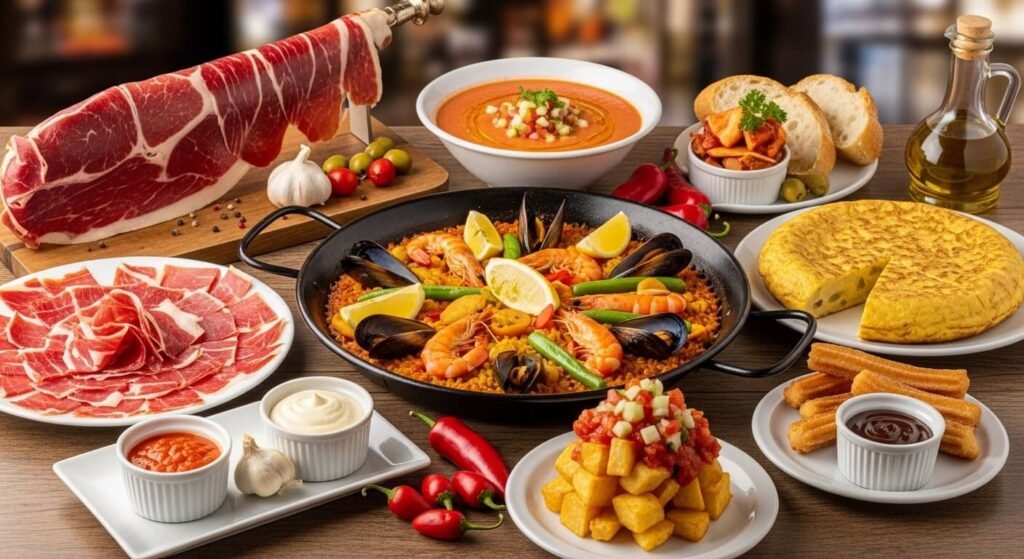
Paella, from Valencia, is one of the most well-known dishes in Spain. It combines rice, saffron, vegetables, and meats or seafood.
Types include:
- Seafood paella: Shrimp, mussels, fish
- Mixed paella: Chicken, rabbit, seafood
- Vegetable paella: Seasonal vegetables and beans
Paella is traditionally cooked in a wide, shallow pan over an open flame for flavor.
Tapas
Tapas are small dishes meant for sharing, central to Spanish food culture.
Popular tapas:
- Patatas bravas (spicy fried potatoes)
- Jamón ibérico (Iberian ham)
- Croquetas (fried meat or cheese balls)
- Gambas al ajillo (garlic shrimp)
Eating tapas is a social experience, often enjoyed with drinks and friends.
Gazpacho
Gazpacho is a cold tomato-based soup from Andalusia. Made with tomatoes, peppers, cucumbers, garlic, and olive oil, it is light, healthy, and refreshing—perfect for summer.
Tortilla Española
Tortilla Española, or Spanish omelet, includes eggs, potatoes, and onions. It can be served hot or cold and is found in homes and tapas bars.
Churros and Chocolate
Churros are fried dough sticks, often served with thick hot chocolate. They are a sweet treat for breakfast or snacks and are part of traditional Spanish food.
Spanish Food Culture
Spanish food culture emphasizes family, friends, and social meals:
- Lunch around 2 pm, dinner around 9 pm
- Fresh, local ingredients
- Regional dishes reflect local produce and climate
- Sharing food, especially tapas, is common
Understanding this culture makes enjoying Spain and food a more authentic experience.
Regional Specialties
Spain’s regions have unique dishes:
- Valencia: Paella and seafood
- Andalusia: Gazpacho and fried fish
- Basque Country: Pintxos (small snacks) and seafood
- Catalonia: Crema Catalana and seafood stews
- Galicia: Fresh shellfish and octopus dishes
Trying regional specialties lets visitors experience authentic Spanish cuisine.
Ingredients That Define Spanish Cuisine
Spanish dishes rely on fresh, quality ingredients:
- Olive oil: Main cooking fat
- Garlic and onions: Flavor base
- Seafood: Shrimp, cod, mussels, squid
- Meat: Iberian ham, chorizo, lamb
- Vegetables: Tomatoes, peppers, beans
- Spices: Saffron, paprika, herbs
These ingredients create the rich taste that makes famous Spanish dishes so loved worldwide.
Health Benefits
Many traditional Spanish food dishes are nutritious:
- Olive oil provides healthy fats
- Vegetables and beans give fiber and vitamins
- Seafood offers omega-3 fatty acids for heart health
- Moderate portion sizes promote balanced meals
Spanish Desserts
Desserts are an important part of Spanish food culture:
- Flan: Caramel custard
- Churros: Fried dough sticks with chocolate
- Turrón: Almond nougat, popular during holidays
- Crema Catalana: Custard with caramelized sugar
These sweets are simple, delicious, and traditional.
Modern Spanish Cuisine
Modern chefs mix tradition with creativity:
- Innovative tapas and regional dishes
- Fusion recipes combining global flavors
- Fine dining with local produce
- Creative presentation while keeping traditional taste
This evolution keeps Spanish cuisine relevant and exciting.
Tips for Enjoying Spanish Food
- Visit local markets and tapas bars
- Try street food and regional specialties
- Attend food festivals
- Take cooking classes to learn traditional Spanish food
Following these tips allows visitors to fully experience Spain and food.
Conclusion
Spain offers a rich culinary tradition with dishes full of flavor, history, and culture. From famous Spanish dishes like paella and tapas to desserts like churros, traditional Spanish food reflects Spain’s geography and heritage. Understanding Spanish food culture helps travelers enjoy meals, learn recipes, and connect with local traditions.
Exploring Spain and food is more than just eating—it’s experiencing a vibrant culinary culture that blends history, taste, and community.
Red More:Food Kindness: How Small Actions Make a Big Difference
Frequently Asked Questions (FAQ)
1. What is Spain food known for?
Spain food is known for its fresh ingredients, regional dishes, and flavors like olive oil, seafood, meats, and spices. Popular meals include paella, tapas, gazpacho, and churros.
2. What are some famous Spanish dishes?
Famous Spanish dishes include paella, tapas, tortilla española, gazpacho, jamón ibérico, churros, and crema catalana.
3. Is traditional Spanish food healthy?
Yes, many traditional Spanish meals are healthy. They use fresh vegetables, olive oil, seafood, and moderate portions, making them nutritious and balanced.
4. What is Spanish food culture like?
Spanish food culture focuses on family, social meals, sharing dishes (like tapas), and enjoying long meals with fresh local ingredients.
5. Where can I try authentic Spanish cuisine?
Authentic Spanish cuisine can be enjoyed in local restaurants, tapas bars, street food markets, and food festivals across different regions of Spain.