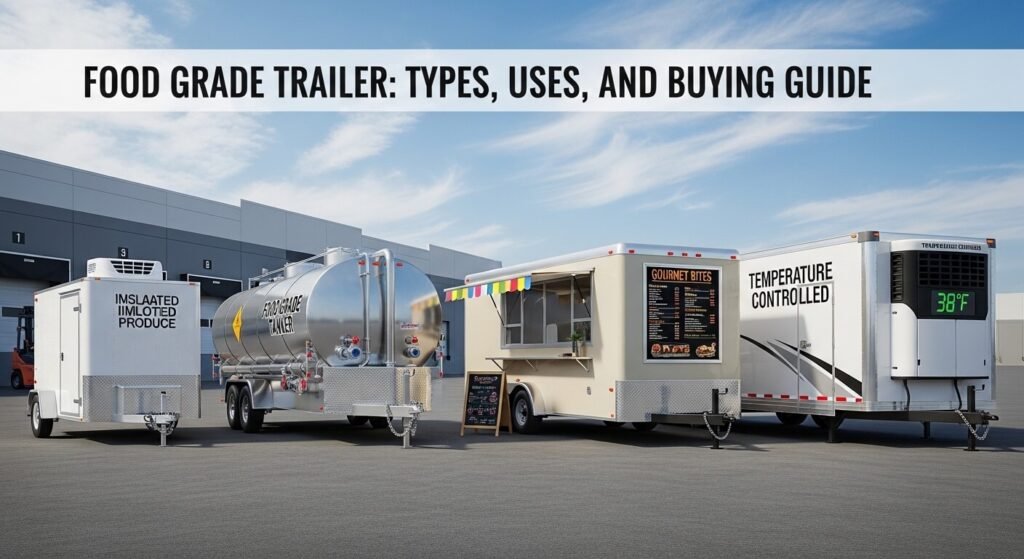

Introduction
Transporting food products safely is a major challenge for food manufacturers, distributors, and logistics companies. Liquids such as milk, edible oil, juice, and syrups require strict hygiene standards during transportation to prevent contamination and maintain product quality. Using ordinary transport equipment can lead to food safety risks, regulatory violations, and product spoilage. The solution is using a food grade tank trailer, specially designed with sanitary materials and advanced cleaning systems to ensure safe transportation of liquid and bulk food products.
A stainless steel food grade trailer is built with hygienic materials, insulated tanks, and smooth internal surfaces that prevent bacterial growth and maintain food purity. These trailers are widely used in the food and beverage industry to transport products safely from manufacturing facilities to processing plants, warehouses, and retail distribution centers.
In this guide, we will explain everything about liquid food transport trailers, including their types, uses, features, safety standards, and tips for choosing the right sanitary food transport trailer for your business.
What Is a Food Grade Tank Trailer?
A food grade tanker trailer is a specialized transport vehicle designed for carrying liquid or bulk food products under strict sanitation conditions. These trailers are commonly used to transport items such as:
- Milk and dairy products
- Fruit juices and beverages
- Edible oils
- Liquid sugar and syrups
- Chocolate and food ingredients
Unlike standard industrial tankers, food-grade trailers are constructed using materials that meet food safety standards and allow easy cleaning to prevent contamination.
Key Characteristics
A typical stainless steel food grade trailer includes:
- Food-safe stainless steel interior
- Smooth internal surfaces for easy cleaning
- Insulation to maintain temperature
- Specialized valves and piping
- Sanitary fittings designed for food handling
These features ensure that the transported food remains safe and uncontaminated during transit.
Why Food Grade Trailers Are Important
Food safety regulations require strict transportation practices. Using a liquid food transport trailer helps companies comply with these requirements while maintaining product quality.
Main Benefits
1. Prevents Contamination
Food-grade materials and sealed tanks protect products from contaminants.
2. Maintains Product Quality
Temperature control systems help preserve flavor and freshness.
3. Meets Regulatory Standards
Food transport regulations require sanitary equipment for edible products.
4. Improves Logistics Efficiency
Specialized trailers allow large quantities of liquid food to be transported efficiently.
Because of these advantages, the food grade tanker trailer has become essential in the global food supply chain.
Types of Food Grade Tank Trailers
Different industries use various types of sanitary food transport trailers depending on the product being transported.
1. Single-Compartment Tank Trailers
These trailers contain one large tank used to transport a single product. They are commonly used for:
- Milk transport
- Edible oil transportation
- Liquid sugar distribution
Single-compartment designs allow efficient cleaning and simple product handling.
2. Multi-Compartment Tank Trailers
Multi-compartment food grade tank trailers contain several separate tanks within the same trailer.
Benefits include:
- Transporting multiple products at once
- Reducing transportation costs
- Improving delivery flexibility
Food companies often use these trailers for beverage and dairy distribution.
3. Insulated Food Grade Trailers
Some food products require temperature control. Insulated liquid food transport trailers help maintain consistent temperatures during transport.
They are commonly used for:
- Chocolate and syrup transport
- Dairy products
- Sensitive beverage ingredients
Insulation helps prevent spoilage and preserves product quality.
4. Heated Tank Trailers
Certain food products become thick or solid at lower temperatures. Heated food grade tanker trailers include heating systems that keep products in liquid form.
These trailers are used for transporting:
- Molasses
- Liquid sugar
- Cooking oils
Heating systems ensure that the product can be unloaded easily.
Materials Used in Stainless Steel Food Grade Trailers
The most important material used in sanitary food transport trailers is stainless steel. This metal offers several advantages for transporting edible products.
Benefits of Stainless Steel Tanks
- Corrosion resistance
- Smooth non-porous surface
- Easy cleaning and sanitation
- Long-lasting durability
- Compliance with food safety standards
Stainless steel prevents bacteria buildup and helps maintain hygienic conditions inside the tank.
Food Products Transported in Liquid Food Transport Trailers
Many food and beverage industries rely on food grade tank trailers for transportation.
Commonly Transported Products
Dairy Products
- Milk
- Cream
- Yogurt base
Beverages
- Fruit juice
- Soft drink syrup
- Energy drink ingredients
Food Ingredients
- Liquid sugar
- Corn syrup
- Chocolate
Edible Oils
- Vegetable oil
- Olive oil
- Cooking oil
These trailers allow manufacturers to move large quantities of liquid food safely across long distances.
Hygiene and Sanitation Standards
Hygiene is the most important requirement for sanitary food transport trailers. The interior surfaces must be cleaned thoroughly after each delivery.
Cleaning Process
Typical cleaning steps include:
- Pre-rinse with water
- Chemical cleaning solution
- High-temperature rinse
- Final sanitization
Many trailers use CIP (Clean-in-Place) systems, which automatically clean the tank interior without requiring manual entry.
Maintaining proper sanitation ensures that each new shipment remains free from contamination.
Regulations for Food Grade Tanker Trailers
Government authorities regulate food transportation to protect consumer health. Companies operating liquid food transport trailers must follow strict safety guidelines.
Key Regulatory Requirements
- Use of food-safe materials
- Regular cleaning and inspection
- Documentation of sanitation procedures
- Temperature monitoring for sensitive products
Compliance with these regulations helps companies avoid contamination risks and legal penalties.
Key Features to Look for When Buying a Food Grade Trailer
Choosing the right food grade tanker trailer is essential for food logistics operations.
1. Tank Material
High-quality stainless steel is the best choice because it resists corrosion and maintains hygiene.
2. Insulation and Temperature Control
Insulated tanks are necessary for products that require temperature stability.
3. Capacity and Compartments
Consider whether your business needs single or multi-compartment trailers.
4. Cleaning Systems
CIP systems and smooth interior surfaces simplify sanitation processes.
5. Safety Valves and Piping
Sanitary valves and secure piping prevent leaks and contamination.
These features ensure efficient and safe transportation of liquid food products.
Maintenance of Sanitary Food Transport Trailers
Regular maintenance is necessary to keep stainless steel food grade trailers operating safely and efficiently.
Maintenance Practices
- Inspect valves and hoses regularly
- Clean tanks thoroughly after each delivery
- Check insulation and heating systems
- Monitor tank pressure and structural condition
Proper maintenance extends the lifespan of the trailer and ensures compliance with food safety standards.
Industries That Use Food Grade Tank Trailers
Many industries depend on liquid food transport trailers for their logistics operations.
Major Industries
Dairy Industry
Milk collection and transport from farms to processing plants.
Beverage Industry
Transporting juice concentrates, syrups, and ingredients.
Food Manufacturing
Moving bulk ingredients between production facilities.
Cooking Oil Distribution
Transporting edible oils to packaging and distribution centers.
These industries rely on specialized trailers to maintain food quality and safety.
Advantages of Using Food Grade Tanker Trailers
Using food grade tank trailers provides several operational benefits.
Key Advantages
- Ensures food safety compliance
- Protects product quality
- Allows large-volume transportation
- Reduces contamination risks
- Improves logistics efficiency
These advantages make them essential equipment for modern food supply chains.
Frequently Asked Questions
What is a food grade tank trailer?
A food grade tank trailer is a specialized tanker designed to transport edible liquids safely while maintaining strict hygiene standards.
Why are stainless steel trailers used for food transport?
Stainless steel is durable, corrosion-resistant, and easy to sanitize, making it ideal for food transportation.
What products can be transported in a liquid food transport trailer?
Products include milk, juice, edible oil, syrups, chocolate, and other liquid food ingredients.
How are sanitary food transport trailers cleaned?
They are cleaned using specialized washing systems such as CIP cleaning, hot water rinsing, and sanitizing solutions.
What industries use food grade tanker trailers?
Dairy, beverage, food manufacturing, and cooking oil industries commonly use these trailers.
Conclusion
Safe transportation plays a critical role in the food supply chain. Companies must ensure that products remain clean, fresh, and uncontaminated from production to delivery. This is why food grade tank trailers are widely used across the food and beverage industry.
A stainless steel food grade trailer provides the sanitation, durability, and temperature control necessary for transporting liquid food products. With features such as insulated tanks, sanitary valves, and automated cleaning systems, these trailers help companies maintain high food safety standards.
Whether transporting milk, juice, edible oil, or liquid ingredients, a reliable liquid food transport trailer ensures that products reach their destination safely and efficiently. Businesses investing in high-quality sanitary food transport trailers can improve logistics performance while protecting consumer health.
For reservations and additional information, visit : candizi.net