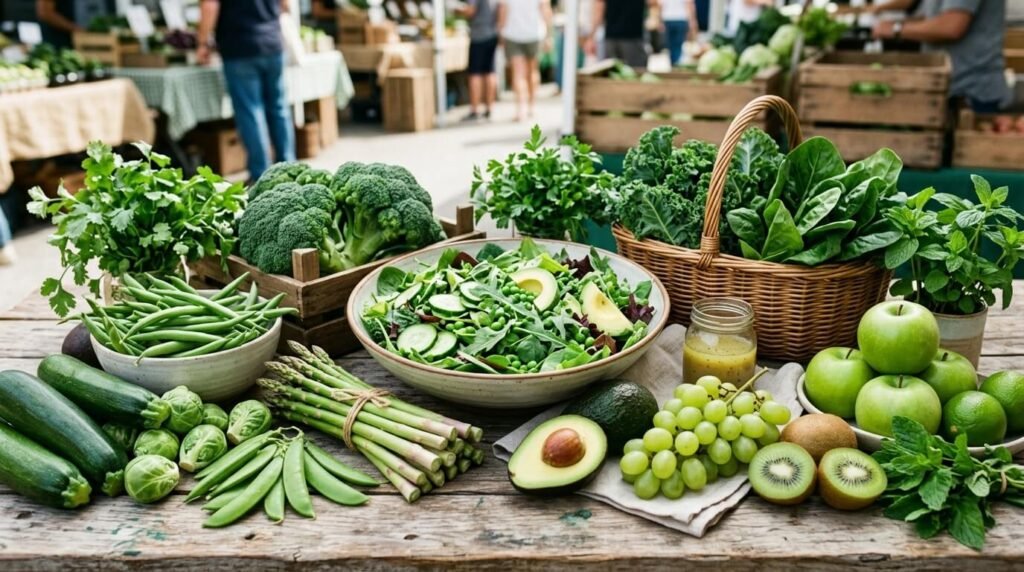

Many people do not get enough vitamins, minerals, and fiber from their daily meals. Eating too many processed foods can lead to low energy, poor digestion, and weak immunity. A simple solution is to include more green foods in your everyday diet. Leafy vegetables, healthy fruits, and natural superfoods provide important nutrients that support overall wellness and help maintain a balanced lifestyle.
What Are Green Foods?
The term green foods refers to vegetables, fruits, herbs, algae, and other plant-based foods that are naturally green in color. These foods are rich in vitamins, minerals, antioxidants, and fiber. They are known for supporting heart health, digestion, immunity, and overall well-being.
Some common examples include:
- Spinach
- Kale
- Broccoli
- Cabbage
- Green beans
- Lettuce
- Avocados
- Kiwi
- Peas
- Seaweed
- Wheatgrass
- Cucumbers
These nutrient-rich foods are low in calories and can easily become part of a healthy eating plan.
Why Eating Green Vegetables Matters
Nutrition experts recommend adding more leafy vegetables and plant-based foods to daily meals because they provide nutrients that many people lack.
Benefits include:
- Better digestion
- Healthy bones
- Improved heart health
- Strong immune system
- Natural energy
- Weight management support
- Reduced inflammation
A colorful plate that includes vegetables and fruits helps the body function properly and lowers the risk of many health problems.
Nutritional Value Found in Green Vegetables
Green vegetables contain a wide range of nutrients that support different body functions.
Vitamin A
Vitamin A supports healthy vision, skin, and immune function.
Vitamin C
This vitamin acts as an antioxidant and helps the body fight infections.
Vitamin K
Vitamin K plays an important role in bone strength and blood clotting.
Fiber
Dietary fiber supports digestion and helps you feel full for longer.
Iron
Iron helps carry oxygen throughout the body and prevents fatigue.
Calcium
Calcium is necessary for healthy bones and teeth.
Potassium
Potassium helps regulate blood pressure and supports heart function.
Magnesium
Magnesium contributes to muscle health and energy production.
Health Benefits of Green Foods
Adding green foods to your meals can provide many health benefits. Their combination of vitamins, minerals, and antioxidants makes them one of the healthiest parts of any diet.
Support Heart Health
Leafy greens and cruciferous vegetables contain potassium, fiber, and antioxidants. These nutrients help maintain healthy blood pressure and cholesterol levels.
Examples include:
- Spinach
- Kale
- Broccoli
- Cabbage
Regular consumption of these vegetables may contribute to better cardiovascular health.
Improve Digestion Naturally
Fiber-rich vegetables support gut health and prevent constipation. They feed beneficial bacteria in the digestive system and improve bowel movement.
Foods that contain high amounts of fiber include:
- Green peas
- Spinach
- Broccoli
- Brussels sprouts
Healthy digestion also helps the body absorb nutrients more effectively.
Strengthen the Immune System
Vitamin C and antioxidants help protect cells from damage and support the body’s natural defense system.
Immune-supporting foods include:
- Broccoli
- Kale
- Kiwi
- Spinach
- Cabbage
Eating these regularly can help maintain overall wellness.
Promote Healthy Bones
Calcium, magnesium, and vitamin K work together to maintain bone density.
Good choices include:
- Collard greens
- Spinach
- Kale
- Broccoli
Strong bones become even more important as people age.
Help Maintain a Healthy Weight
Most vegetables are naturally low in calories and high in fiber. This combination keeps you satisfied for a longer period and may reduce unhealthy snacking.
Foods that support weight management include:
- Lettuce
- Cucumbers
- Spinach
- Green beans
- Zucchini
Fight Oxidative Stress
Antioxidants found in plant foods help protect cells against free radicals.
Powerful antioxidants are found in:
- Kale
- Broccoli
- Spinach
- Avocados
These nutrients support healthy aging and may help reduce inflammation.
Top Green Superfoods to Include in Your Diet
Spinach
Spinach is one of the most nutrient-dense vegetables. It contains iron, vitamin C, vitamin K, and antioxidants.
Ways to enjoy spinach:
- Salads
- Smoothies
- Soups
- Sandwiches
- Pasta dishes
Broccoli
Broccoli belongs to the cruciferous vegetable family and is rich in vitamin C, fiber, and sulforaphane.
Health benefits include:
- Supports immunity
- Promotes digestion
- Helps heart health
- Contains antioxidants
Steamed broccoli works well as a side dish or in stir-fries.
Kale
Kale is often called a superfood because it contains impressive amounts of vitamins A, C, and K.
You can add kale to:
- Smoothies
- Salads
- Soups
- Healthy chips
Avocados
Avocados are rich in healthy fats, potassium, and fiber. They support heart health and provide lasting energy.
Popular ways to eat avocados include:
- Toast
- Salads
- Sandwiches
- Smoothies
Conclusion
Adding more green foods to daily meals is one of the simplest ways to improve nutrition and overall health. These vegetables and fruits provide vitamins, minerals, antioxidants, and fiber that support digestion, immunity, heart health, and healthy aging. Small changes, such as adding spinach to smoothies or broccoli to dinner, can make a big difference over time.