
Recovering from oral surgery can be uncomfortable, especially when eating becomes painful or difficult. Many patients feel confused about what foods are safe to eat without damaging the surgical area or slowing down healing. Eating the wrong foods may cause irritation, bleeding, or infection. The best solution is to follow a soft-food diet that supports healing while providing proper nutrition. Choosing the right soft foods to eat after oral surgery can reduce pain, protect the surgical site, and help the body recover faster.
Why Diet Matters After Oral Surgery
After dental procedures such as tooth extraction, wisdom tooth removal, or gum surgery, the mouth becomes sensitive and vulnerable. The surgical area needs time to heal, and eating hard or crunchy foods can interfere with this process.
A carefully planned diet that includes soft foods to eat after oral surgery can help patients maintain proper nutrition while preventing irritation to the gums or teeth.
Benefits of a soft-food diet include:
- Reduced pressure on the surgical site
- Lower risk of bleeding or infection
- Easier chewing and swallowing
- Faster healing process
Dentists usually recommend following soft food guidelines for several days after surgery.
What Are Soft Foods?
Soft foods are foods that require little chewing and are gentle on the mouth. These foods are easy to swallow and do not irritate sensitive areas inside the mouth.
Examples of soft foods to eat after oral surgery often include foods with smooth textures such as mashed, pureed, or blended meals.
Common characteristics of soft foods include:
- Smooth or creamy texture
- Easy to chew or swallow
- Mild temperature and flavor
- Low risk of food particles getting stuck in wounds
Choosing foods with these qualities helps protect the healing area and reduces discomfort.
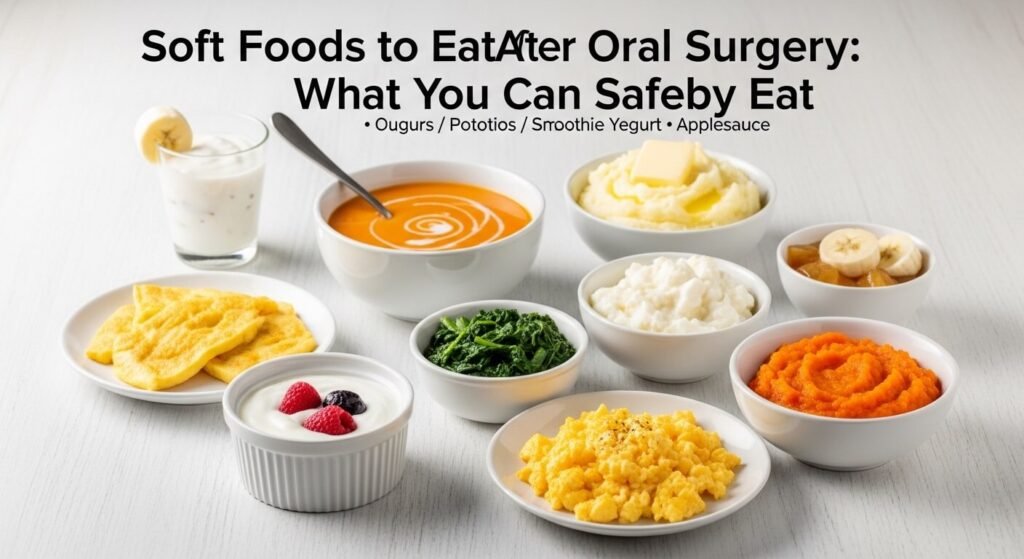
Best Soft Foods to Eat After Oral Surgery
During recovery, it is important to choose foods that are both soft and nutritious. Here are some commonly recommended options.
Yogurt
Yogurt is one of the easiest foods to eat after dental surgery. It has a smooth texture and provides protein and probiotics that support digestion.
Mashed Potatoes
Mashed potatoes are soft, filling, and easy to swallow. They provide energy and comfort while being gentle on the mouth.
Smoothies
Fruit smoothies are rich in vitamins and minerals. They are among the most popular soft foods to eat after oral surgery because they require no chewing.
Applesauce
Applesauce is a simple fruit-based option that is easy to eat and provides natural sweetness and nutrients.
Scrambled Eggs
Soft scrambled eggs are a good source of protein and are gentle on sensitive gums.
Soup and Broth
Warm soups provide hydration and nutrients. Blended vegetable soups are especially helpful during recovery.
Oatmeal
Oatmeal becomes soft when cooked and can be flavored with fruits or honey for added nutrition.
These foods help maintain energy levels while protecting the healing area.
Nutritional Importance During Recovery
Proper nutrition is essential for healing after oral surgery. The body needs vitamins, minerals, and protein to repair tissues and prevent infection.
Healthy soft foods to eat after oral surgery should include balanced nutrients such as:
- Protein for tissue repair
- Vitamins for immune support
- Healthy carbohydrates for energy
- Fluids to prevent dehydration
Including nutrient-rich foods in the recovery diet helps improve the healing process.
Soft Breakfast Ideas After Oral Surgery
Breakfast is an important meal, even during recovery. Several breakfast options are easy to prepare and comfortable to eat.
Examples include:
- Smooth yogurt with soft fruits
- Oatmeal with mashed bananas
- Scrambled eggs with soft toast pieces
- Fruit smoothies
These meals provide energy without causing discomfort in the mouth.
Soft Lunch and Dinner Options
Lunch and dinner can still be satisfying even when following a soft-food diet.
Examples of soft foods to eat after oral surgery for lunch or dinner include:
- Creamy vegetable soups
- Soft pasta with mild sauce
- Mashed sweet potatoes
- Soft rice with broth
- Blended vegetable dishes
These meals provide variety while remaining gentle on the mouth.
Foods to Avoid After Oral Surgery
While soft foods are recommended, certain foods should be avoided during recovery because they may irritate the surgical site.
Avoid foods such as:
- Hard or crunchy snacks
- Spicy foods
- Sticky candies
- Acidic fruits
- Very hot foods and drinks
These foods can cause discomfort, increase swelling, or damage healing tissues.
Hydration and Recovery
Drinking enough fluids is just as important as eating the right foods. Staying hydrated helps the body heal and prevents dryness in the mouth.
Recommended drinks include:
- Water
- Milk
- Smoothies
- Nutritional shakes
However, patients should avoid drinking through straws immediately after surgery because suction can disrupt the healing process.
Tips for Eating Comfortably After Surgery
Eating after oral surgery can be easier by following a few simple tips.
Helpful suggestions include:
- Eat small meals throughout the day
- Choose lukewarm foods rather than hot foods
- Chew on the opposite side of the mouth
- Avoid foods that require heavy chewing
- Follow dentist instructions carefully
These habits make eating more comfortable and support the healing process.
When to Return to Normal Foods
Most patients gradually return to normal foods within several days to a week after surgery. However, recovery time may vary depending on the type of dental procedure.
Patients should slowly transition from soft foods to eat after oral surgery to regular foods once pain and swelling decrease.
Dentists often recommend starting with soft solid foods before returning to harder foods.
Importance of Following Dentist Instructions
Every dental procedure is different, and recovery instructions may vary from patient to patient. It is important to follow professional dental advice carefully.
Dentists may recommend specific foods, medications, and hygiene routines that support healing and prevent complications.
Listening to professional guidance helps ensure a safe and comfortable recovery.
Conclusion
Recovering from dental surgery can be challenging, especially when eating becomes uncomfortable. Choosing the right diet plays a key role in protecting the surgical area and helping the body heal properly. Soft foods to eat after oral surgery provide essential nutrition while minimizing irritation and pain. From smoothies and yogurt to mashed potatoes and soups, many gentle foods can support recovery and keep energy levels stable. By following a soft-food diet, staying hydrated, and listening to dental advice, patients can recover more comfortably and return to normal eating habits as healing progresses.
Frequently Asked Questions (FAQs)
1. What are the best soft foods to eat after oral surgery?
Some of the best soft foods to eat after oral surgery include yogurt, mashed potatoes, smoothies, applesauce, scrambled eggs, oatmeal, pudding, and blended soups. These foods are easy to chew and gentle on the healing gums.
2. How long should you eat soft foods after oral surgery?
Most dentists recommend eating soft foods for about 3 to 7 days after surgery, depending on the procedure. More complex surgeries such as wisdom tooth removal may require a soft diet for a longer period.
3. Can I eat rice after oral surgery?
Soft rice may be allowed after a few days, but it is better to wait until the surgical site begins healing. Small rice grains can sometimes get stuck in the extraction area and cause irritation.
4. Are smoothies safe after oral surgery?
Yes, smoothies are one of the most recommended soft foods to eat after oral surgery because they provide vitamins and hydration. However, avoid using a straw since the suction can disturb the healing blood clot.
5. Can I eat eggs after oral surgery?
Yes, scrambled eggs are a great option after oral surgery. They are soft, high in protein, and easy to chew, making them ideal for recovery.
6. What foods should I avoid after oral surgery?
You should avoid hard, crunchy, spicy, sticky, or very hot foods. Chips, nuts, popcorn, candies, and acidic foods may irritate the surgical area and slow down healing.
7. Can I drink coffee after oral surgery?
Dentists usually recommend avoiding hot beverages like coffee for the first 24 to 48 hours after surgery. Heat can increase bleeding and irritation in the surgical area.
8. Is yogurt good after oral surgery?
Yes, yogurt is one of the safest and healthiest soft foods to eat after oral surgery. It has a smooth texture and contains probiotics that support digestion and overall health.
9. When can I start eating normal foods again?
You can slowly return to normal foods once swelling and pain decrease. Many patients transition back to regular meals within one week, but it depends on the healing process.
10. Why is a soft-food diet important after oral surgery?
A soft-food diet protects the surgical site, prevents irritation, and allows the gums and tissues to heal properly. It also reduces the risk of complications such as bleeding or infection.
For reservations and additional information, visit : candizi.net