
Introduction
Many home cooks struggle with bland flavors, dry textures, or meals that simply don’t feel “restaurant-quality.” The missing secret is often not expensive ingredients—but technique. One simple solution is using wine in the kitchen. Wine enhances flavor, adds depth, and transforms ordinary recipes into rich, memorable dishes. In this guide, you’ll learn how to use wine correctly, avoid common mistakes, and try delicious recipes that bring out the best in your cooking.
What Does Wine Do in Cooking?
Wine is more than just a beverage—it’s a powerful cooking ingredient. It enhances both aroma and taste by balancing acidity and richness.
Key Benefits of Cooking with Wine:
- Adds depth and complexity
- Enhances natural flavors of food
- Helps tenderize meat
- Creates rich sauces and marinades
When used properly, Wine in the Kitchen becomes a flavor booster that elevates every dish.
Types of Wine Used in Cooking
Choosing the right wine is essential. Not all wines work well in every recipe.
1. Red Wine
Best for:
- Beef dishes
- Lamb recipes
- Tomato-based sauces
Popular options include Merlot, Cabernet Sauvignon, and Pinot Noir.
2. White Wine
Best for:
- Chicken dishes
- Seafood
- Cream-based sauces
Chardonnay and Sauvignon Blanc are commonly used.
3. Cooking Wine vs Drinking Wine
A general rule:
If you wouldn’t drink it, don’t cook with it.
Cooking wines often contain added salt and preservatives, which can affect taste.
How to Use Wine in the Kitchen Properly
Using wine correctly is key to getting the best results.
Tips for Success:
- Add wine early to allow alcohol to cook off
- Use moderate amounts—don’t overpower the dish
- Pair wine with ingredients (red with red meat, white with fish)
- Let wine simmer to enhance flavor
Mastering these basics ensures your Wine in the Kitchen experience is successful.
Common Mistakes to Avoid When Cooking with Wine
Even simple mistakes can ruin a dish.
Avoid These Errors:
- Using too much wine
- Adding wine too late in cooking
- Choosing low-quality wine
- Not letting alcohol cook off
Understanding these pitfalls will improve your cooking instantly.
Delicious Recipes Using Wine in the Kitchen
Here are some must-try recipes that showcase the magic of wine.
1. Creamy White Wine Chicken
Ingredients:
- Chicken breast
- Garlic
- Cream
- White wine
- Butter
Instructions:
Cook chicken in butter, add garlic, pour white wine, let it reduce, then mix in cream. Simmer until thick.
Why it works:
The wine adds acidity that balances the richness of cream.
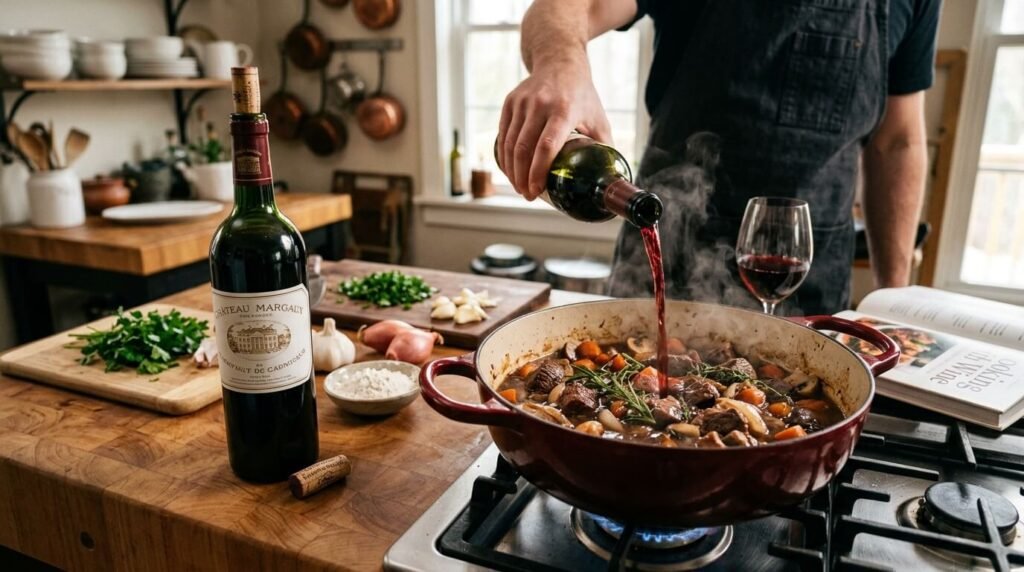
2. Red Wine Beef Stew
Ingredients:
- Beef chunks
- Carrots
- Onions
- Red wine
- Broth
Instructions:
Brown beef, add vegetables, pour red wine and broth, then slow cook until tender.
Why it works:
Red wine deepens flavor and tenderizes meat.
3. Garlic Shrimp in White Wine Sauce
Ingredients:
- Shrimp
- Garlic
- Olive oil
- White wine
- Lemon juice
Instructions:
Sauté garlic, add shrimp, pour wine, cook briefly, and finish with lemon.
Why it works:
Wine enhances the natural sweetness of shrimp.
4. Mushroom Risotto with Wine
Ingredients:
- Arborio rice
- Mushrooms
- Onion
- White wine
- Parmesan
Instructions:
Cook onions and mushrooms, add rice, pour wine, then slowly add broth while stirring.
Why it works:
Wine adds depth and aroma to the creamy texture.
Best Food Pairings with Wine-Based Dishes
Pairing wine with food enhances the overall experience.
Simple Pairing Guide:
- Red wine dishes → Pair with bold red wines
- White wine dishes → Pair with light white wines
- Creamy dishes → Pair with acidic wines
This pairing approach makes Wine in the Kitchen even more enjoyable.
Health Benefits of Cooking with Wine
While wine contains alcohol, most of it evaporates during cooking.
Potential Benefits:
- Contains antioxidants
- May support heart health (in moderation)
- Enhances appetite and digestion
However, moderation is key.
How to Store Wine for Cooking
Proper storage keeps wine fresh and usable.
Storage Tips:
- Keep wine in a cool, dark place
- Refrigerate after opening
- Use within a few days for best flavor
Good storage ensures consistent results when using Wine in the Kitchen.
Why Wine Makes Food Taste Better
Wine works because of its chemical composition.
It contains:
- Acidity (balances fat)
- Sugar (enhances flavor)
- Alcohol (releases aromas)
This combination creates a well-rounded taste experience.
Expert Tips for Beginners
If you’re new to cooking with wine, start simple.
Beginner Advice:
- Try easy recipes first
- Use small amounts
- Taste as you cook
- Experiment gradually
Confidence builds with practice.
Conclusion: Elevate Your Cooking with Simple Ingredients
Cooking doesn’t have to be complicated to be delicious. By adding one simple ingredient, you can transform your meals completely. Wine in the Kitchen is not just a technique—it’s a way to bring depth, richness, and creativity into everyday cooking. Whether you’re making a quick dinner or a special dish, using wine can take your flavors to the next level. Start small, experiment often, and enjoy the journey of creating meals that truly stand out.