
Introduction
Many travelers visit hot springs for relaxation and wellness, but few realize that these natural wonders have also shaped food traditions for centuries. From Japan’s famous hot spring eggs to New Zealand’s geothermal cooking methods and volcanic cuisine in the Azores, hot springs have become an important part of culinary culture around the world. The solution lies in understanding how geothermal energy naturally cooks food, preserves flavors, and creates unique dining experiences. Today, food hot springs offer a fascinating connection between nature, sustainability, and traditional cooking methods that continue to attract food lovers and travelers alike.
What Are Food Hot Springs?
Food hot springs refer to natural geothermal areas where hot water, steam, and underground heat are used to prepare food. These locations harness the Earth’s natural thermal energy instead of relying on conventional cooking methods.
Hot springs form when groundwater is heated by geothermal activity beneath the Earth’s surface. In many regions, local communities discovered that this natural heat could cook vegetables, seafood, meat, and eggs efficiently. As a result, geothermal cooking became part of local traditions and cuisines.
The History of Cooking with Hot Springs
The use of geothermal heat for cooking dates back hundreds, and possibly thousands, of years.
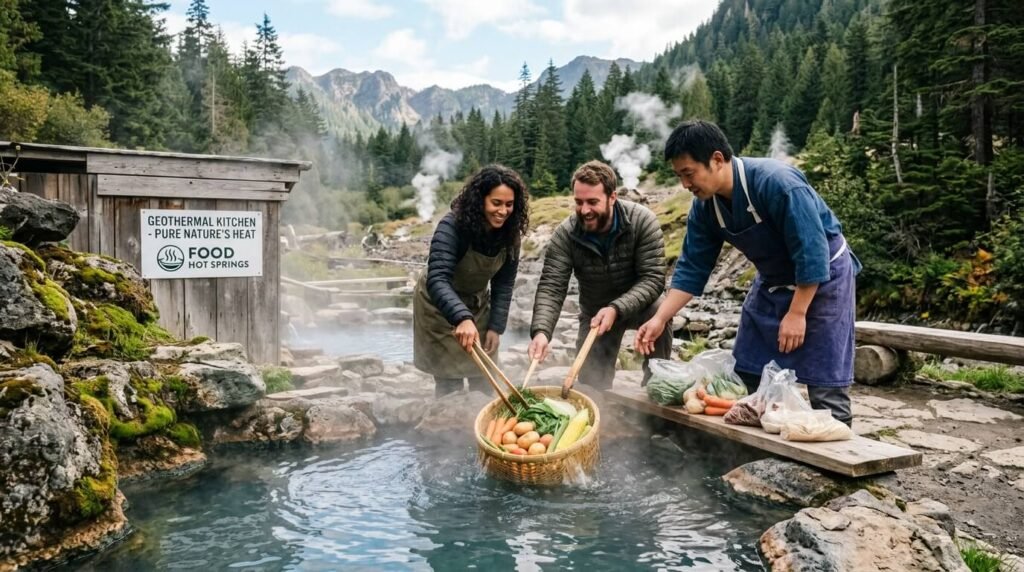
Ancient communities living near volcanic regions learned how to use boiling water pools and steam vents for preparing meals. Indigenous Māori communities in New Zealand traditionally cooked food by lowering baskets into hot pools or steaming food using geothermal heat. Similar practices developed in Japan and other volcanic regions worldwide.
These methods allowed people to cook food efficiently without gathering large amounts of firewood.
How Food Hot Springs Work
The process behind food hot springs is surprisingly simple.
Natural geothermal systems produce:
- Hot mineral water
- Steam vents
- Geothermal heat pockets
- Boiling pools
Food is placed in baskets, steam chambers, or specially designed cooking containers. The natural heat slowly cooks ingredients while preserving moisture and nutrients.
Unlike frying or grilling, geothermal cooking often creates tender textures and rich natural flavors because food cooks gently and evenly.
Famous Food Hot Springs Around the World
Beppu, Japan
Beppu is one of the world’s most famous geothermal cooking destinations. The city is known for “Jigokumushi,” meaning “hell steaming.”
Local chefs use hot spring steam to cook:
- Vegetables
- Seafood
- Meat
- Eggs
The steam reaches temperatures of approximately 100°C, allowing food to cook naturally while retaining flavor and nutrients.
Hakone, Japan
Hakone is famous for its black eggs, known as Kuro Tamago.
These eggs are cooked in sulfur-rich hot spring water, causing the shells to turn black. Local folklore suggests eating one may add years to your life.
Rotorua, New Zealand
Rotorua’s geothermal landscape has supported traditional Māori cooking practices for generations.
Visitors can still experience foods cooked using geothermal steam and hot pools, preserving cultural heritage while offering unique flavors.
Furnas, Azores, Portugal
The Furnas region is famous for Cozido das Furnas, a traditional stew cooked underground using volcanic heat.
Ingredients are placed in pots and buried near geothermal vents for several hours, creating a meal infused with natural earth-heated flavors.
Popular Foods Cooked in Hot Springs
Hot Spring Eggs (Onsen Tamago)
One of the most famous examples of food hot springs is the Japanese Onsen Tamago.
These eggs cook slowly in geothermal water at controlled temperatures, producing a creamy texture with soft whites and custard-like yolks.
Vegetables
Vegetables steamed in geothermal heat often retain:
- More moisture
- Better texture
- Natural sweetness
Popular choices include potatoes, corn, carrots, and sweet potatoes.
Seafood
Many coastal geothermal regions use natural steam to prepare:
- Fish
- Shrimp
- Crab
- Shellfish
The gentle cooking process helps preserve delicate flavors.
Traditional Stews
Volcanic and geothermal cooking methods are commonly used for large family-style stews that cook slowly over several hours.
Benefits of Geothermal Cooking
Environmentally Friendly
Geothermal cooking requires little or no fossil fuel consumption.
This reduces carbon emissions and promotes sustainable food preparation methods. Geothermal heat is considered one of the cleanest renewable energy sources available.
Enhanced Flavor
Natural steaming preserves food’s original taste and texture better than many high-temperature cooking techniques.
Energy Efficient
Communities near geothermal regions can utilize naturally available heat instead of paying for traditional cooking fuels.
Cultural Preservation
Food hot springs help maintain historical cooking traditions that have been passed down through generations.
The Science Behind Hot Spring Cooking
Geothermal cooking works because underground volcanic activity heats groundwater and creates steam.
Different temperatures produce different culinary results:
- 60–70°C: Soft-cooked eggs
- 80–100°C: Vegetables and seafood
- Above 100°C steam environments: Faster steaming processes
The slow transfer of heat often produces unique textures difficult to replicate using conventional cooking equipment.
Are Food Hot Springs Safe?
Safety depends on the specific hot spring.
Many commercial geothermal cooking locations carefully monitor water quality and temperature. However, not all hot springs are safe for cooking because some may contain:
- High sulfur concentrations
- Harmful bacteria
- Unsafe mineral levels
Visitors should only cook food in designated geothermal cooking areas approved by local authorities.
Food Hot Springs and Sustainable Tourism
Food tourism continues to grow worldwide, and geothermal cooking experiences have become major attractions.
Travelers increasingly seek authentic cultural experiences that combine:
- Local cuisine
- Natural landscapes
- Historical traditions
- Sustainable practices
Food hot springs offer all of these elements in a single experience, making them highly attractive destinations for eco-conscious tourists.
Future of Food Hot Springs
As interest in sustainability increases, geothermal food preparation may play a larger role in eco-friendly culinary tourism.
Researchers continue exploring geothermal applications in agriculture, food processing, and drying technologies, suggesting that natural geothermal heat could become an even more valuable resource for future food systems.
Conclusion
Food hot springs represent a remarkable blend of nature, culture, and cuisine. From Japan’s famous Onsen Tamago and Jigokumushi steam cooking to New Zealand’s Māori geothermal traditions and the volcanic stews of the Azores, geothermal cooking demonstrates how communities have harnessed Earth’s natural heat for generations. Beyond their culinary appeal, food hot springs support sustainability, preserve cultural heritage, and offer unforgettable travel experiences. As eco-friendly tourism and renewable energy gain importance worldwide, food hot springs will likely continue inspiring chefs, travelers, and food enthusiasts for years to come.